Scripture · 6 min read
What Is Lectio Divina? A Simple Catholic Guide for Beginners
Lectio divina is not a complicated technique. It is a slow conversation in which Scripture becomes listening, response, silence, and action.
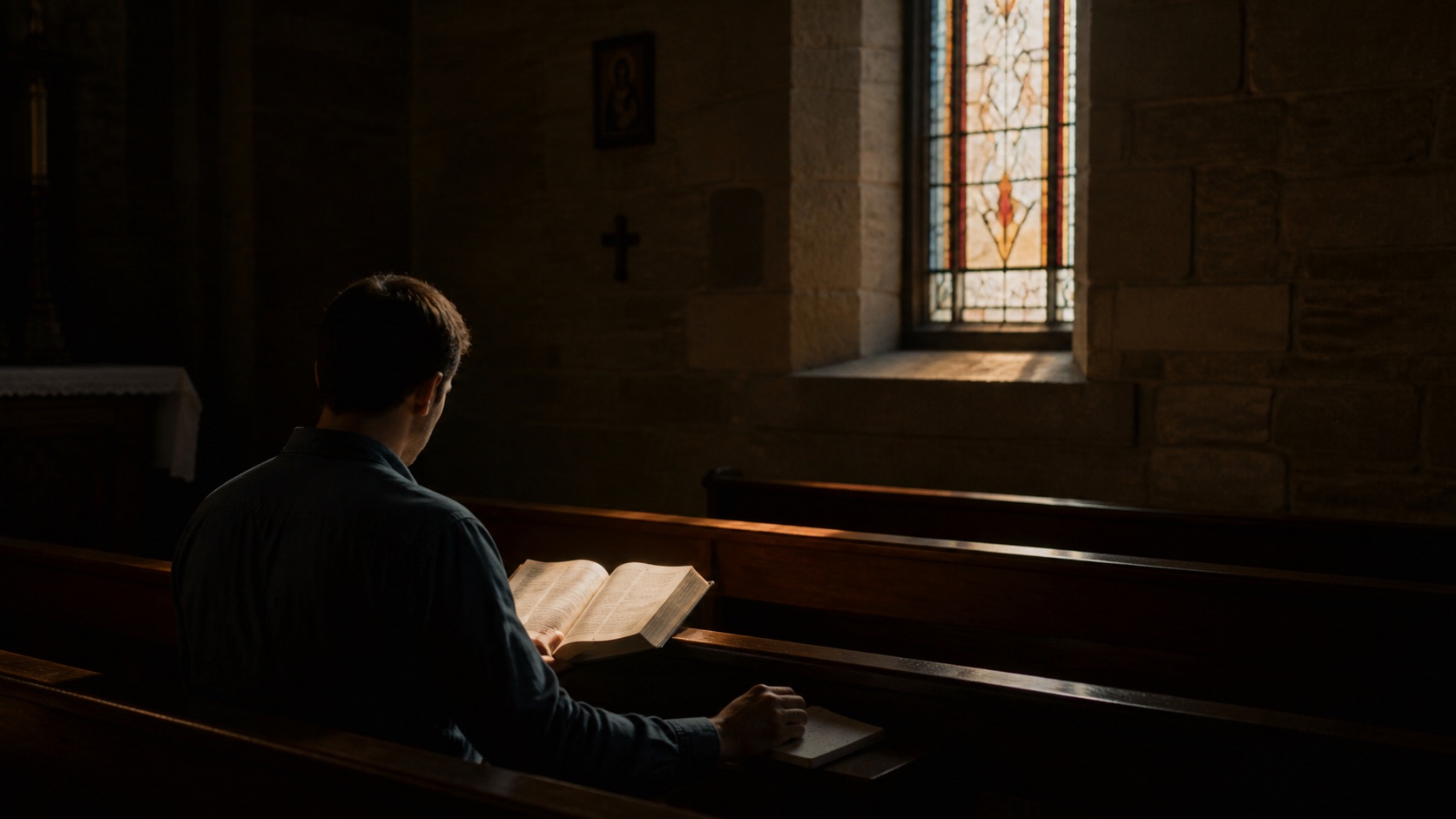
You read a Gospel passage, reach the end, and realize your mind was somewhere else. The words passed in front of you, but you did not remain with them. Lectio divina offers a slower way. It helps Scripture move from the page into attention, prayer, silence, and life.
The Latin phrase lectio divina means divine reading. It is the prayerful reading of Sacred Scripture. The goal is not to collect unusual insights or empty the mind. The goal is to listen to God’s Word, respond honestly, and rest in His presence.
Lectio Divina Is a Conversation, Not a Performance
In ordinary conversation, one person speaks and the other listens. Then the listener responds. Lectio divina follows that simple movement: God addresses us through Scripture, we receive the text within the faith of the Church, we answer in prayer, and we remain quietly with Him.
You do not need a monastery, an hour of silence, or advanced theological training. Ten quiet minutes with a short Gospel passage can be enough. The method guides attention; grace is God’s work.
The Five Movements of Lectio Divina
Lectio divina is commonly described through four traditional movements, with action often named as the fruit that follows. They are not rigid boxes. You may move back and forth as the passage opens.
1. Lectio — Read
Choose a short passage and read it slowly two or three times. Ask first what the text actually says. Notice the people, actions, repeated words, questions, setting, and movement. Do not hurry to make the passage about yourself before you have listened to it.
2. Meditatio — Meditate
Remain with the word, phrase, image, or action that draws your attention. Ask why it matters and how it touches your real life. Meditation is not inventing a secret meaning. It is allowing the true meaning of the passage to question, console, correct, or direct you.
3. Oratio — Pray
Respond to God. Your prayer may become gratitude, sorrow, praise, petition, repentance, or a simple request for grace. Speak plainly. If Jesus asks a question in the passage, answer it. If He heals, name what needs healing. If He calls, tell Him what makes you hesitate.
4. Contemplatio — Rest
Let the words become quiet. Remain with God without trying to manufacture another thought. Contemplation is a gift, not a state you force. Sometimes it is simply one peaceful minute of loving attention. Sometimes it feels dry. Both can be offered to God.
5. Actio — Carry It into Life
Ask what one faithful response belongs to the passage. Forgive someone. Send the honest message. Stop one harsh reply. Give five quiet minutes to a person you usually rush. Scripture bears fruit when it becomes love, obedience, mercy, and conversion.
How to Choose a Passage
Use a short Gospel scene, the Gospel reading from Mass, a Psalm, or a passage already returning to your attention. Avoid opening the Bible at random and treating the first verse you see as a private prediction. God’s Word is not a fortune-telling device.
If you are new to Scripture, begin with a scene that has a clear action or encounter: the call of the first disciples, the calming of the storm, the healing of Bartimaeus, the woman at the well, the Prodigal Son, or a Resurrection appearance. This Catholic Bible beginner guide gives you a seven-day set of Gospel passages.
A Ten-Minute Lectio Divina Practice
- Minute 1: settle, make the Sign of the Cross, and ask the Holy Spirit for light.
- Minutes 2–3: read a short passage slowly twice.
- Minutes 4–5: remain with one word, image, or action.
- Minutes 6–7: tell God what the passage awakens in you.
- Minutes 8–9: rest quietly without searching for more words.
- Minute 10: name one small action and close with an Our Father.
Do not watch the clock anxiously. The times are only a gentle container. If one movement becomes fruitful, remain there. Lectio divina is relationship, not a productivity system.
An Example with Bartimaeus
Read Mark 10:46–52. First notice what happens: Bartimaeus hears that Jesus is near, cries out, persists when others silence him, throws aside his cloak, comes to Jesus, and receives a question.
Perhaps the question holds you: What do you want me to do for you? Do not rush past it. Let Jesus ask it. Notice whether your answer is clear, guarded, ashamed, or uncertain.
Then respond: Lord, I want courage for this conversation. I want freedom from resentment. I want to trust You again. After speaking, stay quiet. Your action might be to name the need honestly to someone who can help or to stop hiding it from prayer.
What Lectio Divina Is Not
- It is not searching for a hidden code in every word.
- It is not replacing careful study or the Church’s interpretation.
- It is not forcing an emotional or mystical experience.
- It is not using an isolated verse to justify a decision already made.
- It is not measuring prayer by how peaceful you feel afterward.
A personal application should grow from the meaning of the passage, not contradict it. Read with the whole of Scripture, Sacred Tradition, and the teaching of the Church. If an impression pushes you toward sin, fear, contempt, or reckless certainty, it is not a faithful fruit of the Word.
What to Do with Distractions
When your mind wanders, return to the last phrase you remember. Read it aloud. Let your finger rest under the words. If a practical concern keeps returning, write it on a separate page and promise to address it after prayer.
Do not restart the whole prayer each time. The gentle return is part of the prayer. For more help, read how to pray when you are distracted.
Lectio Divina and Silence
Silence in lectio divina is not an empty gap. It is the room where a received word can settle. You do not have to fill every moment with explanation. After responding, let God be God and let yourself be present. This reflection explains why silence matters in Catholic prayer.
Lord Jesus,
meet me in Your Word.
Teach me to read without rushing,
listen without controlling,
respond without hiding,
and rest without demanding a feeling.
Let this passage become love in action.
Holy Spirit, lead me into truth.
Amen.
Begin with One Passage
Choose Mark 10:46–52 or tomorrow’s Gospel reading. Give it ten minutes. Read, notice, answer, rest, and carry one action. Do not judge the prayer while you are still praying it.
Lectio divina becomes familiar through repetition. The steps will slowly feel less like instructions and more like the natural rhythm of a conversation with God.
Questions
What does lectio divina mean?
Lectio divina means divine reading. It is the prayerful reading of Sacred Scripture in which reading becomes meditation, personal prayer, quiet contemplation, and a faithful response in daily life.
What are the steps of lectio divina?
The traditional movements are lectio (read), meditatio (meditate), oratio (pray), and contemplatio (rest with God). Actio names the concrete response that carries the Word into life.
How long should lectio divina take?
Ten to twenty minutes is a realistic beginning. The method is flexible; remain longer with a movement when it becomes fruitful and avoid turning the prayer into a timed performance.
Which Bible passage is best for a beginner?
Choose a short Gospel encounter such as Mark 10:46–52, Luke 15:11–32, or John 4:4–30. The Gospel reading from Mass is also a strong daily choice.
Is lectio divina the same as Bible study?
No. Study asks careful questions about history, language, context, and doctrine. Lectio divina uses the true meaning of the text as the beginning of a prayerful encounter and response. The two support each other.
What if I feel nothing during lectio divina?
Continue gently. Contemplation is a gift and prayer does not depend on a strong feeling. Read faithfully, respond honestly, and let your small action become the fruit of the passage.
Can I practice lectio divina with the Psalms?
Yes. The Psalms already give language to praise, grief, fear, repentance, and trust. Choose a short section and use the same rhythm of reading, meditation, prayer, silence, and action.