Catholic Teaching · 8 min read · Published
Why Do Catholics Venerate the Cross?
Catholics honor the Cross because it reveals Christ's saving love. Veneration is not worship of an object, and the September 14 feast helps make that distinction clear.
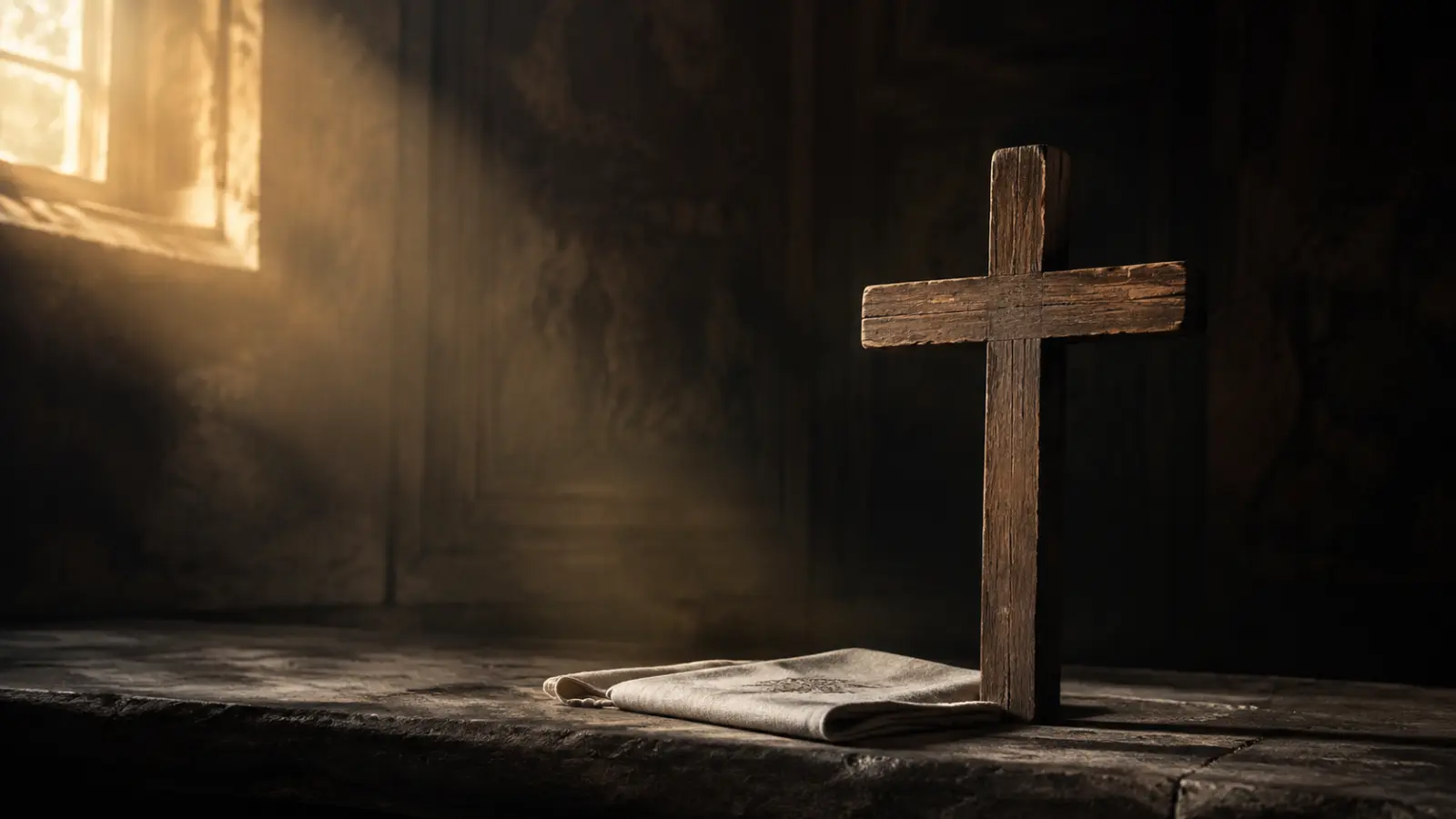
On September 14, the Catholic Church celebrates the Feast of the Exaltation of the Holy Cross. The name can sound strange. Why exalt an instrument of execution? Why bow before a cross, kiss it during the Good Friday liturgy, or keep a crucifix in a home? Is that worshiping an object?
Catholics do not adore wood, metal, or any created image. They venerate the Cross because it is inseparable from Jesus Christ and the saving love He revealed there. The distinction matters: worship belongs to God alone; veneration is reverent honor that passes beyond the material sign to the person and mystery it represents. The Cross is honored because Christ transformed it from a sign of defeat into the place where divine love gave itself completely.
What Does It Mean to Venerate the Cross?
To venerate means to show deep religious respect without giving a creature the adoration due to God. The Catechism explains that Christian honor shown to a sacred image reaches the person represented. A photograph of someone you love is not that person, yet treating the photograph with care can express real affection. A crucifix works at a much deeper sacramental level of remembrance, but the basic direction is similar: the gesture does not stop at the object.
When a Catholic bows toward the Cross or touches it with a kiss, the act is addressed to Christ. The wood has no independent power and cannot answer prayer. It makes visible the saving act of Jesus, who entered human suffering freely and loved to the end. The outward gesture helps the body participate in what the heart believes. Catholic prayer is often physical because the Son of God truly took a human body.
Why Sacred Images Are Not Idols
Idolatry gives a created thing the trust, obedience, and worship owed to the Creator. Catholic use of sacred images does the opposite when practiced faithfully: an image directs attention beyond itself. The Catechism grounds this practice in the Incarnation. Because the invisible Son of God truly became visible in Jesus, depicting Him does not deny God's transcendence. It confesses that God entered history, could be seen and touched, and gave His life in a particular human body.
A crucifix should never become a charm, guarantee, decoration emptied of meaning, or substitute for conversion. Owning one does not automatically make a home holy. The image bears fruit when it recalls Christ, leads to prayer, and changes how a person loves. If the object receives attention while Jesus' teaching is ignored, the sign has been separated from the reality it serves.
What Does the Church Exalt on September 14?
The Church does not celebrate cruelty, humiliation, or suffering for its own sake. Pope Francis explained on this feast that Christians exalt the Cross of Jesus, not every cross. The focus is what God did through Christ's self-giving love. The Cross exposes the seriousness of sin and violence, but it also reveals that neither has the final word. Jesus does not answer hatred with hatred. He offers Himself, forgives, and opens the way to life.
The 2026 feast readings make that movement clear. Numbers recalls the bronze serpent lifted up in the desert; Philippians proclaims Christ's humble obedience and exaltation; John presents the Son lifted up so that those who believe may have eternal life. The pattern is not pain becoming good. It is God entering what is deadly and bringing salvation from within it.
This is different from the everyday question of taking up your own cross. Christian discipleship includes costly faithfulness, but the liturgical feast first directs attention to Christ's unique Cross. Catholics do not save themselves by gathering enough suffering. They receive salvation as grace, then learn to love in response.
Why Catholics Prefer a Crucifix
Many Catholics pray before a crucifix, which shows the body of Jesus, while other Christians often use an empty cross. The two images can emphasize complementary truths. An empty cross can recall the Resurrection and Christ's victory. A crucifix keeps the cost and personal character of His love before the eyes: this salvation was not an idea but a gift made in His body. Catholic churches and homes often use the crucifix because the Eucharist continually remembers the same self-offering of Christ.
The crucifix does not imply that Jesus is still dead. Catholics proclaim the Resurrection at every Sunday Mass. Remembering the Passion does not cancel Easter; it identifies the risen Lord as the same Jesus who gave Himself on the Cross. His wounds are not erased from Christian memory. They have become signs of a love stronger than death.
How to Venerate the Cross Without Empty Formality
- Pause before the gesture and name whom it is for: Jesus Christ, not the material object.
- Let the Cross recall one concrete truth: you are loved, forgiveness is possible, and faithful love can cost something.
- Use a simple bodily response such as the Sign of the Cross, a bow, or a reverent touch instead of trying to manufacture emotion.
- Connect the gesture to conversion by forgiving, apologizing, serving, or refusing one form of cruelty.
- If the practice feels unfamiliar, begin with Scripture and honest questions rather than pretending certainty.
A gesture of veneration does not need to produce intense feelings. Its purpose is attention and love. A person may stand quietly before the Cross and say only, “Jesus, thank You.” Another may bring grief, anger, or confusion. The Cross can hold honest prayer because Christ did not remain distant from human pain. Reverence grows from truth, not performance.
A Simple Way to Mark the Feast at Home
On September 14, place a cross or crucifix somewhere uncluttered. Read John 3:13-17 slowly. Notice that the passage connects the lifting up of the Son with God's love for the world. Then sit in silence for one minute. You may bow, touch the Cross reverently, or make the Sign of the Cross. End by choosing one act that makes self-giving love visible in your own circumstances.
A Short Prayer Before the Cross
Lord Jesus, before Your Cross I remember that I am saved by Your love, not by my strength. Keep me from treating holy things as charms or empty decorations. Let this sign lead me to You. Teach me to reject cruelty, receive mercy, forgive honestly, and give myself in faithful love. May Your Cross be my hope, and may Your Resurrection keep that hope alive. Amen.
One Concrete Action
Before September 14, clean or place one cross in your home where you will actually notice it. Stand before it for one minute and ask, “What act of love does Christ's Cross ask of me today?” Write down the first honest, responsible answer. Complete that action quietly before the day ends.
The Sign Points Beyond Itself
Catholics venerate the Cross because it points to Jesus and His saving love. They do not worship the object, glorify suffering, or remain at Good Friday as though Easter never came. The Cross is exalted because Christ made it the revelation of love that refuses to abandon humanity. A faithful gesture toward the Cross should always continue beyond the gesture: into gratitude, repentance, mercy, courage, and practical love.
Official sources
- Readings for the Feast of the Exaltation of the Holy Cross — United States Conference of Catholic Bishops
- Feast of the Exaltation of the Holy Cross — Vatican News
- Catechism of the Catholic Church, 2130-2132: Sacred Images — The Holy See
- Angelus for the Feast of the Exaltation of the Holy Cross, 14 September 2014 — The Holy See
Questions
Do Catholics worship the Cross or crucifix?
No. Catholics adore God alone. They venerate the Cross as a sacred sign of Jesus Christ and His saving sacrifice; the honor passes beyond the material object to Christ.
What is the difference between veneration and worship?
Worship is the adoration owed only to God. Veneration is reverent honor given to a saint, relic, or sacred image because of its relationship to God.
When is the Feast of the Exaltation of the Holy Cross?
The Catholic Church celebrates the Feast of the Exaltation of the Holy Cross on September 14.
Why do Catholics use a crucifix instead of an empty cross?
A crucifix keeps Christ's self-giving love and the bodily reality of His Passion before the eyes. It does not deny the Resurrection, which Catholics proclaim at every Sunday Mass.
Does the feast celebrate suffering?
No. The Church does not praise cruelty or pain for its own sake. It celebrates Christ's love, which entered suffering freely and transformed the Cross into a sign of salvation and hope.
How can I celebrate the Holy Cross feast at home?
Read John 3:13-17, spend one quiet minute before a cross or crucifix, make the Sign of the Cross, and choose one concrete act of self-giving love.