Scripture · 8 min read · Published
What Does ‘Where Two or Three Are Gathered’ Mean?
Jesus promises to be present where two or three gather in His name. The verse is not a minimum attendance rule; it reveals the gift and responsibility of Christian communion.
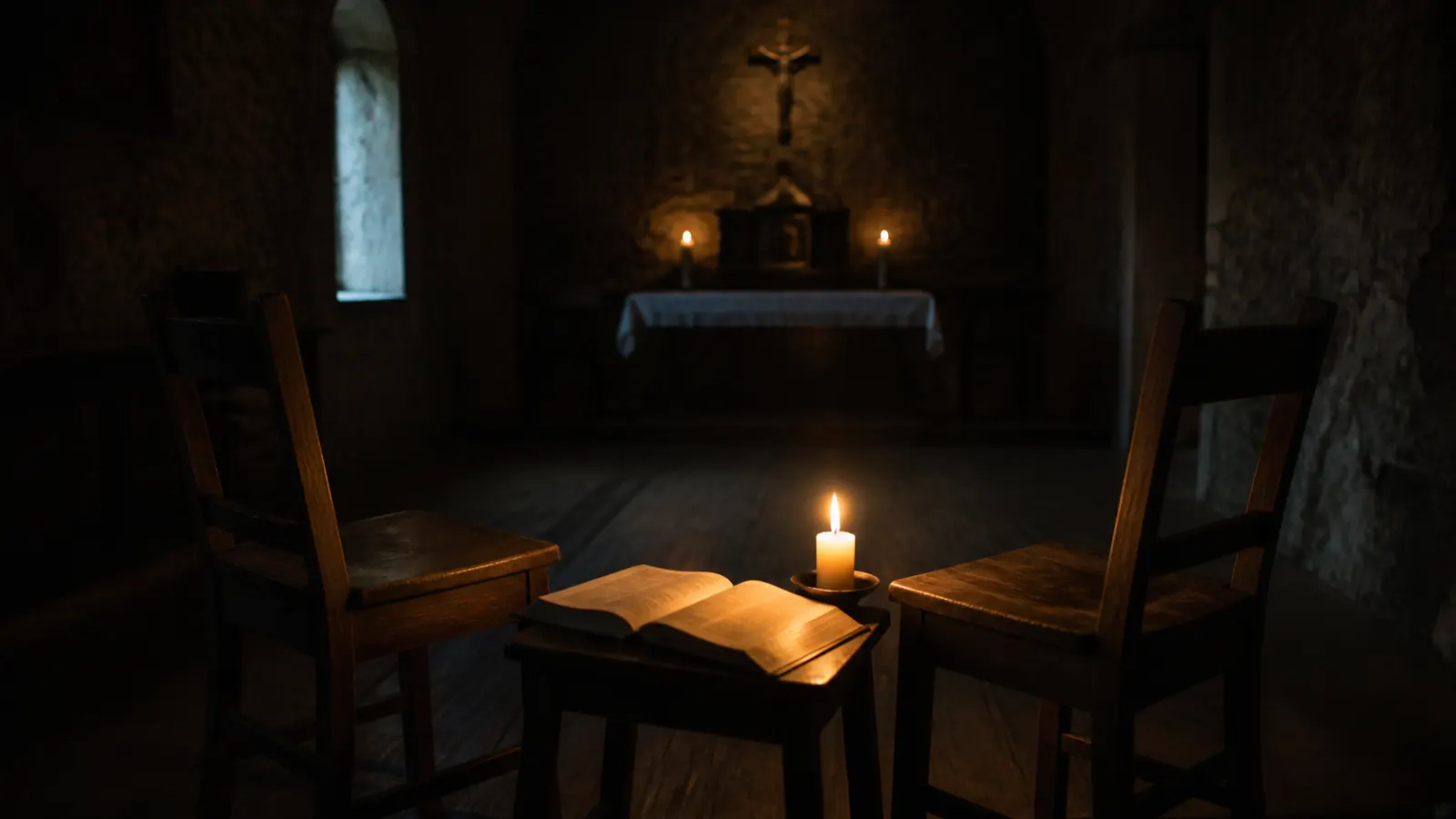
On September 6, 2026, the Gospel for the Twenty-third Sunday in Ordinary Time ends with a familiar promise from Jesus: where two or three gather in His name, He is in their midst. The sentence often appears on prayer-group invitations, parish posters, and family devotionals. It is comforting, memorable, and easy to lift away from the passage that gives it meaning.
Read carefully, Matthew 18:20 is neither a mathematical rule for making prayer work nor a warning that solitary prayer is ineffective. It is a promise about Christ's presence among disciples who gather in His name, especially when communion requires truth, listening, agreement, and reconciliation. That fuller meaning makes the verse more demanding—and more hopeful—than a religious slogan.
Read Matthew 18:20 in Its Full Context
The Sunday Gospel begins with a wounded relationship. Jesus teaches a disciple to speak privately with a brother who has sinned, then to involve one or two others if the first conversation fails, and finally to bring the matter before the Church. The aim is not public embarrassment or winning an argument. Jesus describes a patient movement toward restored communion, with witnesses and the community protecting truth from becoming one person's weapon.
Only then does the passage speak about two people agreeing in prayer and Christ being present among two or three gathered in His name. The promise belongs to a community learning how to remain faithful when relationships are difficult. It assures the disciples that Jesus has not abandoned them to manage conflict, discernment, prayer, and reconciliation by their own intelligence. He stands in their midst.
Is Two or Three a Minimum Number for Prayer?
No. Jesus does not say that the Father ignores a person who prays alone. In Matthew 6, He explicitly teaches His disciples to enter an inner room, close the door, and pray to the Father in secret. Private prayer and shared prayer are not competitors. Each reveals something true about Christian life: God meets the person in hidden intimacy, and Christ also forms believers into a people who pray, listen, forgive, and act together.
The number is not a spiritual multiplier. Three distracted people do not automatically pray better than one attentive person, and a large gathering does not force God to approve whatever the group wants. The heart of the promise is not headcount but the name of Jesus. Christian agreement is placed under His authority, character, teaching, and desire for communion.
What Does It Mean to Gather in Jesus’ Name?
To gather in Jesus' name means more than beginning with a formula. It means allowing Him to be the center and measure of the gathering. His name cannot be used to bless gossip, pressure, contempt, manipulation, or a decision already closed to truth. A group gathered in His name must remain willing to hear Scripture, receive correction, protect dignity, forgive, and seek a good larger than personal victory.
This does not require perfect agreement before prayer begins. Families, friends, and parishioners can bring confusion, tension, and different opinions honestly before God. The promise gives them a new posture: we are not merely facing one another across a disagreement; Christ is present in our midst. That awareness can slow a harsh reply, make room for an apology, and turn a demand into a sincere request for wisdom.
Five Ways to Practice Shared Prayer Without Making It Complicated
- Invite one person to pray for a specific need for five or ten minutes instead of waiting to organize a large group.
- Read the coming Sunday's Gospel aloud before offering opinions, so that Christ's word shapes the conversation.
- Name intentions briefly and protect private details that another person has not given you permission to share.
- Leave a short silence after each intention, resisting the urge to fill every moment with advice or explanation.
- End by choosing one act of reconciliation, service, or encouragement that puts the prayer into practice.
Shared prayer can happen between spouses, friends, siblings, a parent and child, two coworkers during a break, or members of a parish group. It does not need polished language. One person can read Matthew 18:15-20, each person can name one intention, and both can pray the Our Father. Simplicity helps the gathering remain about God rather than anyone's ability to sound spiritual.
How This Promise Relates to Mass and the Church
Informal shared prayer is real and valuable, but it is not interchangeable with the Eucharist. The Catechism describes the Eucharistic assembly as the visible expression of the Church and teaches that Christ Himself is the principal agent of every Eucharistic celebration. At Mass, believers do not create the Church by gathering; Christ gathers His people around the Word, the altar, His sacrifice, and His sacramental presence.
That is why this Sunday's promise should draw Catholics deeper into ecclesial communion rather than away from it. A small prayer meeting can prepare hearts to participate in Mass, repair a damaged relationship, or carry the parish's prayer into the week. It should not become an excuse to treat the Church as unnecessary or to replace the Sunday Eucharist whenever attendance is genuinely possible.
A Short Prayer for Shared Discernment
Jesus, You promise to remain among disciples gathered in Your name. Be the center of our words, our silence, and our decisions. Protect us from using prayer to defend pride or pressure another person. Give us courage to speak truth gently, humility to listen, and grace to seek reconciliation. Lead our small gathering toward the love You desire. Amen.
One Concrete Action Before Sunday
Ask one trusted person to pray with you for ten minutes before September 6. Choose a need that both of you can bring honestly to God without exposing someone else's private story. Read Matthew 18:15-20 aloud, sit in silence for one minute, name the intention in one sentence each, and pray the Our Father together.
Do not measure the prayer by an immediate answer or an emotional feeling. Before you finish, ask whether the Gospel invites one small act: a calmer conversation, a needed apology, a request for wise help, or a practical kindness. If no action is clear, leave the intention with God and carry it to Mass. Christ's promise is first the gift of His presence, not a guarantee that every difficulty will disappear on your schedule.
Receive the Promise Without Turning It Into a Slogan
Matthew 18:20 does not make private prayer second-class, turn agreement into control, or reduce God's presence to a number. It tells the Church that Jesus remains with His disciples as they do the difficult work of communion in His name. When even two people place truth, mercy, and their shared need beneath His authority, they are not alone. He is in their midst, forming a people capable of listening and loving beyond what either person could manage alone.
Official sources
Questions
What does ‘where two or three are gathered’ mean in the Catholic Church?
Matthew 18:20 promises Christ's presence among disciples gathered in His name. In context, the verse belongs to Jesus' teaching about prayer, discernment, reconciliation, and the life of the Church.
Does God hear me if I pray alone?
Yes. Jesus teaches private prayer in Matthew 6:6. Solitary prayer and shared prayer are both genuine Christian practices, and neither cancels the other.
Do two people agreeing in prayer guarantee the result they want?
No. Christian agreement is offered under the name and will of Jesus; it is not a formula that forces God to approve a particular outcome.
What does it mean to gather in Jesus’ name?
It means gathering under Jesus' authority and teaching, remaining open to Scripture, truth, mercy, reconciliation, and a good beyond personal preference.
Can a small prayer group replace Sunday Mass?
No. Shared prayer is valuable, but the Eucharistic assembly has a unique sacramental reality and remains the center of Catholic life.
How can two Catholics pray together simply?
Read a short Gospel passage, keep one minute of silence, name one intention each, pray the Our Father, and choose one small faithful action if the Gospel suggests it.