Catholic Life · 8 min read · Published
What Did Saint John Paul II Mean by ‘Do Not Be Afraid’?
Saint John Paul II’s famous words are not a command to feel fearless. They invite us to open real parts of life to Christ and take one faithful step.
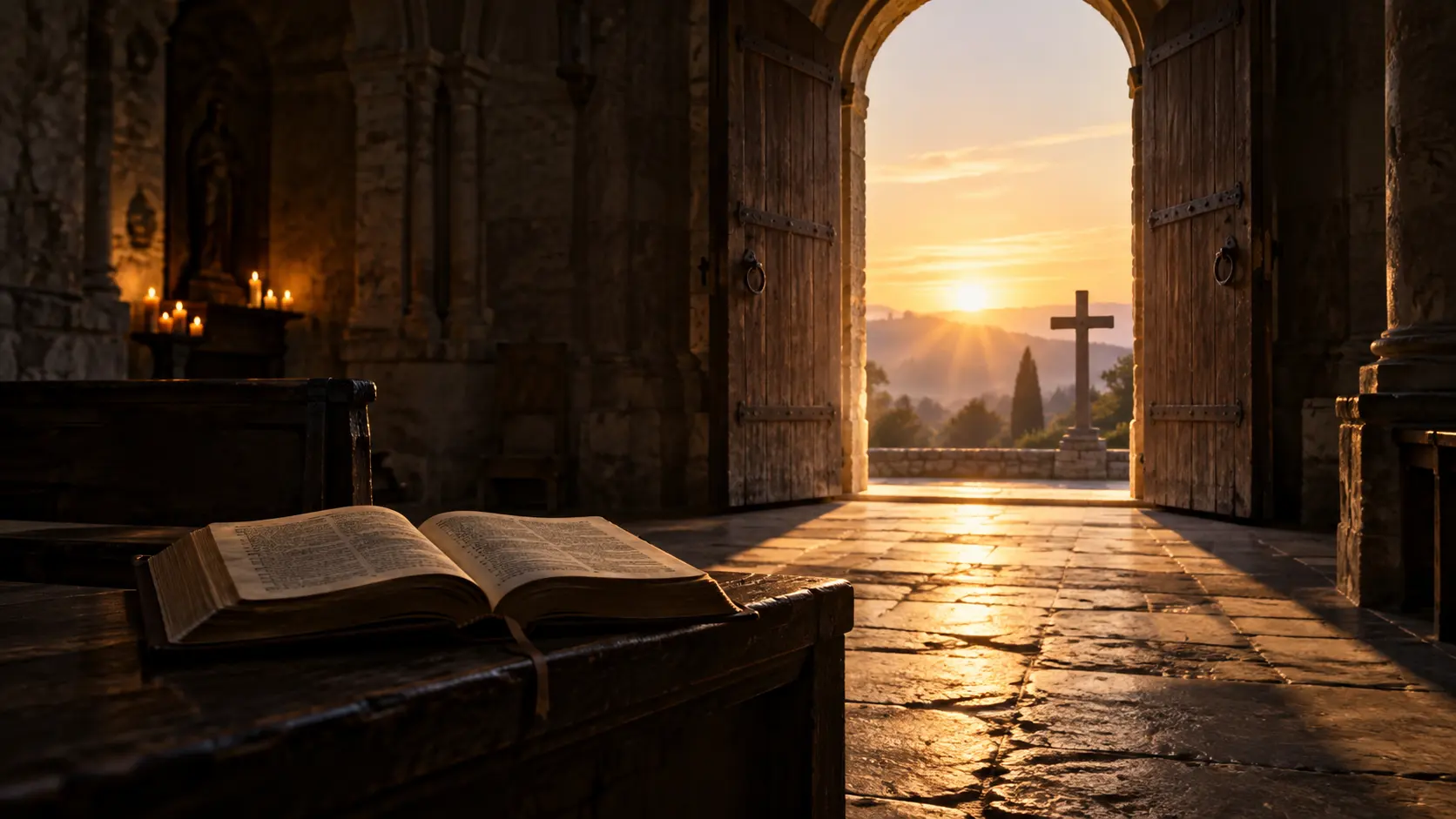
The Church remembers Saint John Paul II on October 22, the anniversary of the Mass that inaugurated his pontificate in 1978. Vatican News recalls the cry that marked that day: ‘Be not afraid!’ The Church’s official reading for his memorial preserves the fuller invitation: ‘Do not be afraid. Open wide the doors for Christ.’
The words are memorable because fear is familiar. Yet they are sometimes reduced to a motivational slogan, as though a Christian should stop feeling anxious, take every risk, or assume that faith guarantees an easy outcome. Saint John Paul II was saying something more demanding and more merciful: fear does not have to decide which parts of life remain closed to Christ.
Why Is Saint John Paul II’s Memorial on October 22?
Many saints are remembered on the date of their death. Saint John Paul II’s liturgical memorial instead recalls October 22, when he began his public ministry as pope. That choice connects the feast to a particular spiritual message. His first appeal was not centered on his own personality. It directed people toward Christ, the One who knows the human heart and brings saving freedom.
This makes the memorial practical even for Catholics who know little about his long pontificate. The day asks a living question: where have I kept a door closed because I fear what Christ might ask, reveal, heal, or change? The feast does not require a complete biography before prayer can begin. It invites one honest opening.
What ‘Do Not Be Afraid’ Actually Means
In the official reading for the memorial, the appeal is immediately joined to opening the doors to Christ. Christian courage is therefore relational. It is not self-confidence detached from God. It grows when a person allows Jesus to enter concrete areas of life: conscience, work, family, weakness, decisions, hopes, and wounds. Fear may still be present, but it no longer receives the final word.
Opening the door is not merely thinking warmly about Jesus. A real opening permits truth and grace to affect what happens next. It may lead to confession, an apology, a needed boundary, professional help, a difficult act of honesty, or patient endurance. The Gospel does not erase human responsibility. It gives responsibility a center: Christ’s love rather than the desperate need to control every consequence.
Four Doors Fear Often Keeps Closed
- The door of being known: fear says that if God sees the whole truth, only condemnation can follow. Prayer opens that room to mercy and conversion.
- The door of a necessary decision: fear demands perfect certainty before one faithful step. Discernment gathers facts, seeks wise counsel, and acts without pretending to control the future.
- The door of honest relationship: fear hides a need, a wound, or an apology. Charity makes truthful speech possible while preserving healthy boundaries.
- The door of vocation and service: fear focuses on inadequacy. Grace asks for the next responsible yes, not a guarantee of flawless performance.
One of these doors may stand out immediately. Do not force all four open at once. A hurried attempt to conquer every fear can become another form of control. Choose the door connected to a real duty or relationship, then ask what a proportionate opening would look like today.
Courage Is Not Recklessness
‘Do not be afraid’ never means ignoring danger, abandoning medical or psychological care, staying in an abusive situation, or making an impulsive decision to prove faith. Prudence is a virtue, not cowardice. A person may trust Christ while locking a door, calling emergency services, consulting a professional, gathering evidence, or declining a responsibility beyond present capacity.
Nor does courage require the disappearance of bodily fear. A racing heart, uncertainty, grief, or reluctance can accompany a faithful choice. The question is not ‘Do I feel fearless?’ but ‘What does love and truth ask of me while I feel this?’ Sometimes the courageous act is speaking. Sometimes it is waiting, seeking help, or refusing manipulation.
A Five-Minute Practice for Opening One Door
Begin with one sentence: ‘Jesus, I am afraid that…’ Name the actual fear without making it dramatic or spiritualizing it. Then write the door that fear is keeping closed. Is it prayer, truth, reconciliation, wise help, a decision, or service? Finally, choose one action small enough to complete today and serious enough to be real.
Examples include scheduling a conversation instead of rehearsing it endlessly, asking a priest about confession, contacting a qualified counselor, reading the information required for a decision, or telling one trustworthy person what support you need. The action is not a payment for grace. It is a way of cooperating with the light Christ is already giving.
A Short Prayer with Saint John Paul II
Lord Jesus Christ, You know what is inside me. I bring You the door I keep closed because I am afraid. Enter with Your truth and mercy. Protect me from recklessness, denial, and the need to control every result. Through the intercession of Saint John Paul II, give me courage for one faithful step, wisdom to seek help, and trust that Your love is not my enemy. Amen.
One Concrete Action for October 22
Draw a simple door on a piece of paper. Inside it, write one area of life you have kept closed to Christ. Beneath it, write the smallest responsible action that would open that area one inch. Complete the action before the day ends. If the situation involves safety, health, law, or serious mental distress, make the action a request for qualified help.
Saint John Paul II’s appeal remains powerful because it does not flatter human strength. It points beyond it. Christ already knows the room behind the door. Opening it does not inform Him of a secret; it allows His presence to become the basis of our response. Fear may knock again tomorrow, but it does not have to hold the key.
Official sources
Questions
When is Saint John Paul II’s feast day?
The Church observes the optional memorial of Saint John Paul II on October 22, the anniversary of the Mass inaugurating his pontificate in 1978.
What exactly did Saint John Paul II say about fear?
The official reading for his memorial preserves the appeal: ‘Do not be afraid. Open wide the doors for Christ.’ The invitation joins courage directly to receiving Christ.
Does ‘do not be afraid’ mean Christians should never feel anxiety?
No. Fear can remain as an emotion or bodily response. Christian courage means letting truth, love, and trust in Christ guide the next action rather than allowing fear alone to decide.
Does faith require taking risks without precautions?
No. Prudence, safety measures, professional care, and wise counsel can be faithful responses. Recklessness is not the same as courage.
What does it mean to open the doors to Christ?
It means allowing Christ’s truth and mercy into concrete areas of life so that prayer leads to conversion, responsible decisions, honest relationships, service, and appropriate help.
How can I celebrate Saint John Paul II’s memorial?
Attend Mass if possible, read the Church’s official memorial reading, pray about one area closed by fear, and take one small responsible action that opens it to Christ.
Can this prayer replace mental-health care?
No. Prayer can accompany counseling, medical care, crisis support, and practical safety. Seek qualified help when fear or distress interferes with daily life or creates danger.