Saints · 7 min read · Published
Saint Charles Borromeo: Where Does Church Renewal Begin?
Saint Charles Borromeo shows that renewal becomes credible when conversion, prayer, sound structures, and concrete charity remain together.
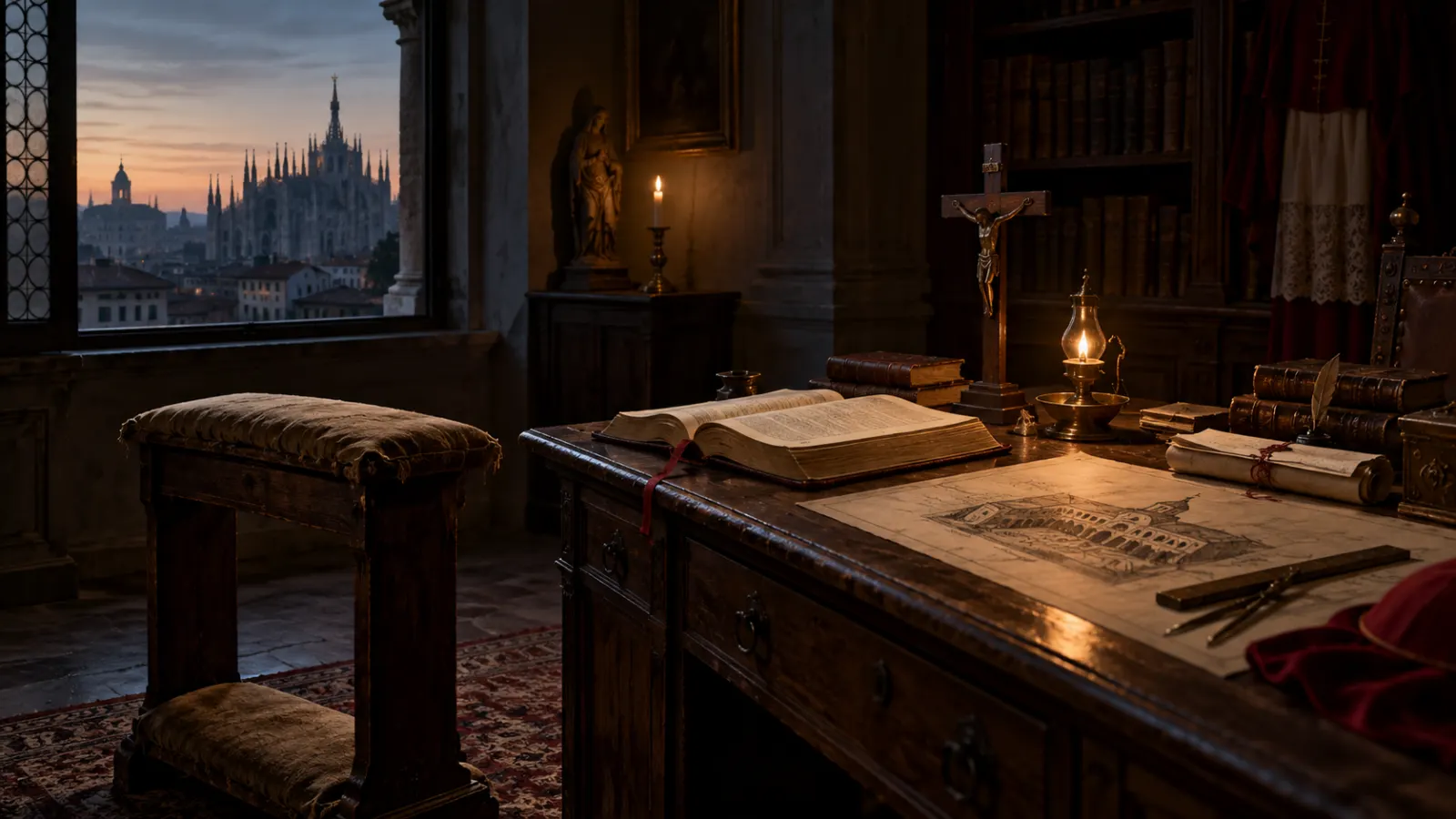
On November 4, the Church celebrates the Memorial of Saint Charles Borromeo, a sixteenth-century Archbishop of Milan closely associated with the implementation of the Council of Trent. His life raises a question that remains useful whenever Catholics speak about problems in the Church: where does credible renewal begin? Charles did not choose between interior conversion and practical reform. He prayed, changed his own life, formed clergy, visited communities, corrected abuses, built institutions, and served people in need.
That combination matters because renewal can easily become an argument about what other people should fix. We may diagnose a parish, criticize leaders, or long for better teaching while leaving our own prayer, speech, responsibilities, and charity untouched. Saint Charles does not tell ordinary Catholics to take authority they do not possess. He does show that every real reform begins with truth before God and then takes the concrete form appropriate to one’s vocation.
Renewal Begins on One’s Knees
Vatican News remembers Charles as a man who joined pastoral action to deep prayer. Benedict XVI likewise presented his reforming work as rooted in a life increasingly conformed to Christ. This protects reform from becoming mere management. Prayer asks a harder question than “Who is failing?” It asks, “Lord, what in me needs conversion, and what good have You actually entrusted to me?”
Beginning with prayer does not mean delaying necessary action. It means refusing to let anger, vanity, or the desire to win become the hidden engine of change. A person can identify a real problem and still approach it badly. Prayer creates space to distinguish evidence from assumption, responsibility from control, and courage from the pleasure of condemnation. It also reminds us that the Church belongs to Christ before it belongs to our plans.
Personal Conversion Is Not a Substitute for Structure
Charles is sometimes reduced to the idea that reform means becoming personally holier. His life says more. Vatican News records his pastoral visits, diocesan organization, seminaries, schools, colleges, hospitals, synods, and attention to priestly formation. He understood that good intentions need habits, training, accountability, and institutions capable of serving people well.
This is a useful safeguard. Telling everyone simply to pray more can become an excuse for leaving preventable confusion or harmful practices untouched. At the same time, changing procedures without changing hearts can produce polished systems still governed by pride or indifference. Catholic renewal needs both: people willing to be converted and structures that make faithful service more likely, transparent, and sustainable.
Begin Where Your Vocation Gives You Responsibility
Most Catholics are not bishops, pastors, or institutional decision-makers. We should not pretend to hold authority that belongs to someone else. Yet each person has a real field of responsibility. A parent can make family prayer more truthful and less pressured. A volunteer can arrive prepared and protect confidentiality. A parishioner can offer specific, respectful feedback through the proper channel. A worker can correct an error, improve a handoff, or ask for clearer expectations.
The size of the responsibility does not determine its spiritual value. Reform often begins with an ordinary promise kept consistently. If a problem lies outside your role, the faithful step may be to document facts, speak to the person responsible, use established safeguarding or reporting procedures, or seek qualified help. Humility is not silence in the face of genuine harm; it is truthful action without inventing authority or certainty.
Charity Is the Test of Credible Reform
Official accounts of Charles emphasize not only organization but charity. He used his resources for the poor, founded hospitals, and remained close to people during severe need in Milan. Renewal was not successful merely because administration became more orderly. Its purpose was that the Church would show Christ more clearly and serve people more faithfully.
That gives us a practical test. Does the proposed change help people pray, receive sound formation, remain safe, access the sacraments, or be treated with greater dignity? Does our way of speaking preserve the humanity of those who disagree? Charity does not forbid correction. It forbids turning another person into an obstacle, a label, or an audience for our righteousness.
A Five-Step Practice for Catholic Renewal
- Pray before diagnosing. Ask Christ to reveal both the real problem and your own mixed motives.
- State one fact clearly. Separate what you observed from what you fear, assume, or heard secondhand.
- Name your responsibility. Decide what belongs to your role and what must be referred to someone with proper authority or expertise.
- Choose one proportionate action. Prepare, ask, repair, report, volunteer, or create a simple system that can actually be maintained.
- Measure the fruit by fidelity and charity. Do not confuse attention, speed, or victory with genuine renewal.
This method is intentionally modest. It resists passivity without feeding the fantasy that one person can fix the whole Church. It also leaves room for patience. Some changes need immediate action, especially where safety or serious wrongdoing is involved; others require consultation, formation, and time. Faithfulness means neither rushing every concern into a public battle nor using complexity as a reason to do nothing.
A Simple Practice for November 4
Before Saint Charles Borromeo’s memorial, choose one area of Catholic life for which you have a genuine responsibility: your prayer routine, family, ministry, parish task, or way of speaking about the Church. Write one sentence naming what is not working. Then write one sentence naming your part. End with one action small enough to complete within a week and, if another person is involved, one respectful conversation or request.
Keep the practice concrete. “The Church should communicate better” is too broad. “I will send the missing information for Sunday’s volunteers by Thursday and ask whether the current process is clear” is actionable. “People need to be holier” is vague. “I will apologize for the way I spoke and begin tomorrow’s meeting with one minute of prayer” joins conversion to repair.
A Prayer with Saint Charles Borromeo
Jesus, You love Your Church more faithfully than I do. Through the witness of Saint Charles Borromeo, teach me to begin renewal with prayer, truth, and conversion. Show me the responsibility that is mine and protect me from controlling what is not. Give courage to correct what should change, patience for work that takes time, and charity toward every person involved. Make my service credible, disciplined, and gentle, so that my small part may reveal Your face more clearly. Saint Charles Borromeo, pray for us. Amen.
One Concrete Action
Choose one recurring task in your family, parish, or ministry that currently creates confusion. Write a three-line improvement: who is responsible, what the next step is, and when it should happen. Share it privately with the appropriate person as a suggestion, not a demand. If the deeper problem is your own inconsistency, begin by completing the task yourself once, carefully and on time.
Saint Charles Borromeo’s example does not give us permission to become permanent critics of the Church. It gives us a more demanding path: remain close to Christ, accept conversion, take responsibility, improve what can be improved, and let charity judge the result. Credible renewal begins neither with complaint alone nor with private virtue alone. It begins when prayer forms people who are willing to build, correct, serve, and persevere.
Official sources
Questions
When is the feast day of Saint Charles Borromeo?
The Church celebrates the Memorial of Saint Charles Borromeo on November 4.
Who was Saint Charles Borromeo?
Saint Charles Borromeo was a sixteenth-century cardinal and Archbishop of Milan who helped implement the Council of Trent and promoted pastoral visits, seminaries, synods, education, hospitals, and care for the poor.
What did Saint Charles Borromeo do for Church reform?
He joined personal conversion and prayer to practical reform. He worked on clergy formation, diocesan organization, pastoral visitation, discipline, education, and charitable service.
Does Church renewal only mean personal holiness?
No. Personal conversion is essential, but Charles’s example also shows the need for sound formation, responsible structures, accountability, and concrete service.
How can an ordinary Catholic help renew the Church?
Begin within your real vocation and responsibility: pray, state facts accurately, keep promises, improve one process, offer respectful feedback, protect people’s dignity, and refer serious concerns through proper channels.
Is criticism of the Church always wrong?
No. Honest correction can be necessary. It should be factual, proportionate, directed to the appropriate person or process, and guided by the good of the Church and the dignity and safety of people.