Saints · 7 min read · Published
Saint Bruno and the Catholic Practice of Silence
Saint Bruno’s October 6 memorial can teach busy Catholics how to make room for prayerful silence without escaping ordinary responsibilities.
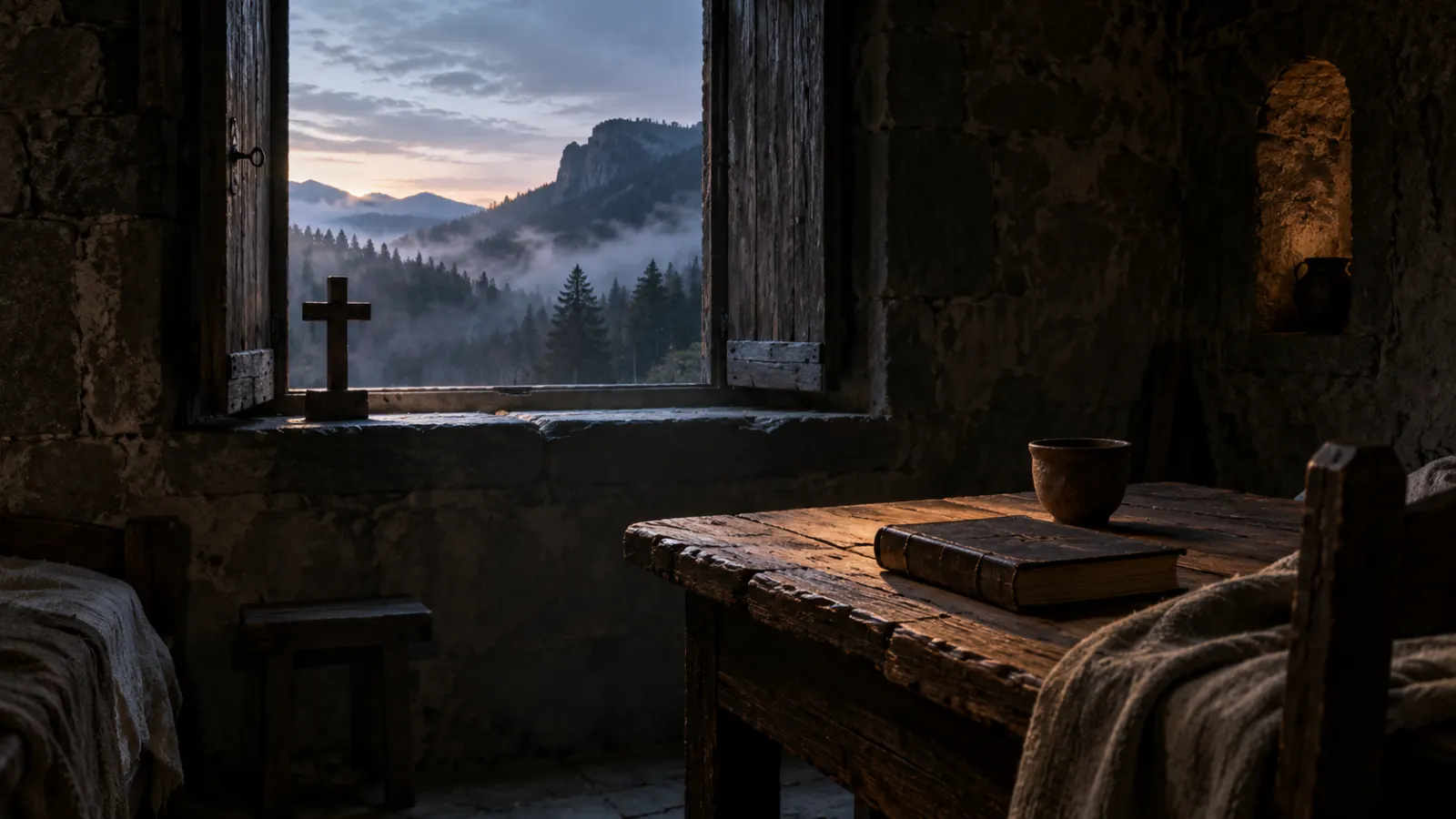
The Church remembers Saint Bruno on October 6. He is known as the founder of the Carthusian tradition, a form of religious life shaped by solitude, silence, prayer, and a remarkably simple common life. Most Catholics are not called to a monastery, but his memorial raises a question that belongs in every vocation: how can we become quiet enough to receive God when our days are crowded with alerts, conversations, duties, and unfinished thoughts?
The answer is not to imitate a monk’s schedule from a distance or to romanticize escape. Saint Bruno’s witness points instead to a disciplined availability. Silence is Christian when it clears space for the Word of God, makes us more truthful about ourselves, and returns us to other people with greater charity. Even a brief daily practice can train the heart to listen rather than react.
Who Was Saint Bruno?
Vatican News describes Bruno as a learned priest who left positions of influence and, with companions, sought a more solitary life devoted to God. In 1084 the group settled in the Chartreuse mountains, where the community that became the Carthusian Order took shape. Later, Bruno served Pope Urban II and eventually lived in Calabria, where he died in 1101. His life joined study, service to the Church, friendship, and withdrawal for prayer.
That balance matters. Bruno did not treat silence as contempt for the Church or for ordinary human needs. His solitude remained ecclesial: a hidden form of service within the Body of Christ. When Benedict XVI visited the Carthusian monastery at Serra San Bruno, he explained that a contemplative vocation can deepen communion with every human being because prayer carries the world before God. Christian silence is therefore not an empty room with the door locked against everyone else.
Silence Is More Than the Absence of Noise
A room can be quiet while the mind continues an argument, plans the next hour, or scrolls through imagined disasters. Catholic silence is not merely low volume. The Catechism presents contemplative prayer as attentive love: a gaze of faith fixed on Jesus, a hearing of the Word, and a silence in which the Father speaks His Word to us. The goal is not a blank mind but a heart made available to God.
This also distinguishes silence from avoidance. Refusing a necessary conversation is not contemplation. Withholding the truth to punish someone is not peace. Ignoring a child, spouse, colleague, or vulnerable person in order to protect a private spiritual mood is not the Carthusian lesson. Real prayer gradually makes us more present, not less responsible. If silence leaves us harsher, more evasive, or less willing to repair harm, the practice needs correction.
Five Ways to Practice Catholic Silence in Daily Life
- Begin with five minutes, not an idealized hour. Choose a repeatable time, place the phone out of reach, and remain before God without demanding a particular feeling.
- Use one short passage of Scripture. Read it slowly twice, keep one phrase, and let the phrase gather your attention when the mind wanders.
- Create a quiet threshold. Before entering work, home, or a difficult conversation, pause long enough to remember that the next person is not an interruption to God’s presence.
- Leave some empty space after speaking. In prayer and conversation, resist filling every pause. A few seconds can reveal whether another person needs time or whether your next sentence is necessary.
- End silence with a duty. Ask what love requires now, then wash the dish, answer the message, apologize, study, rest, or help someone. Contemplation should return us to faithful action.
These practices are deliberately small. Benedict XVI noted at Serra San Bruno that contemplative formation requires time, practice, and patience. A distracted five minutes is not a failed prayer. Returning attention to God is itself part of the training. Regularity matters more than intensity, and humility protects the practice from becoming another achievement to display.
Make a Small Cloister Without Escaping Your Vocation
A cloister marks space for a particular purpose. In an ordinary home, your small cloister might be one chair, a corner of the kitchen before anyone wakes, a parked car before an appointment, or a bench near work. The point is not the beauty of the setting. The point is the decision that, for a few minutes, this place will not be used for news, shopping, messages, or rehearsing arguments.
Protecting that space may require a simple boundary: telling the family when you will be available again, using airplane mode, or choosing a time that does not abandon someone who depends on you. Parents, caregivers, and people working unpredictable hours may need flexible silence rather than a fixed routine. The practice serves your vocation; it should not compete with it.
A Short Prayer for Saint Bruno’s Memorial
Lord Jesus, quiet what keeps me from listening to You. Free my silence from escape, resentment, and self-importance. Teach me to receive Your Word with patience and to carry the people entrusted to me in prayer. Through the intercession of Saint Bruno, make my hidden moments with You fruitful in gentleness, truth, and faithful service. Amen.
One Concrete Action for October 6
For Saint Bruno’s memorial, choose one ten-minute period and one physical place. Put the phone beyond reach. Read Mark 1:35 slowly, because it shows Jesus rising early and going to a deserted place to pray. Sit in silence with one phrase from the verse. When distractions appear, name them briefly before God and return to the phrase without scolding yourself.
Before the ten minutes end, write one duty that prayer is asking you to meet with greater attention. Complete it without announcing the practice to anyone. This keeps silence connected to love. Saint Bruno’s feast then becomes more than admiration for an austere saint: it becomes a modest, repeatable school of listening inside the life God has actually given you.
Not everyone is called to Carthusian solitude, but every Christian needs moments in which noise loses its authority and God is allowed to address the heart. Begin small, remain faithful, and judge the practice by its fruit. Silence that is truly prayer will not make the world disappear. It will help you return to the world less scattered, more honest, and more ready to love.
Official sources
Questions
When is Saint Bruno’s feast day?
The Church remembers Saint Bruno on October 6. He founded the community that became the Carthusian Order.
What is Saint Bruno known for?
Saint Bruno is known for founding the Carthusian tradition, which combines solitude, silence, prayer, simplicity, and limited common life.
Do Catholics need to empty their minds during silent prayer?
No. Catholic contemplative prayer is attentive to God, especially through faith in Christ and listening to His Word; it is not an attempt to make the mind blank.
How long should a beginner practice silence?
Five or ten repeatable minutes is a sound beginning. Consistency and humble return are more useful than attempting a long period that cannot be sustained.
Can silence become avoidance?
Yes. Silence is not Christian when it replaces a necessary conversation, neglects a dependent person, hides harm, or becomes punishment. Prayer should deepen truthful love and responsibility.
Can busy parents or caregivers practice Catholic silence?
Yes. They may need flexible, brief periods that respect real responsibilities. A few protected minutes before others wake, in a parked car, or during a natural pause can become prayer.
What is one simple way to mark Saint Bruno’s memorial?
Set aside ten phone-free minutes with a short Gospel verse, then complete one ordinary duty with greater attention and charity.