Confession · 9 min read
How to Go to Confession After Years Away
If you have not been to Confession in years, you can still return. The Sacrament is not about humiliation. It is about mercy, truth, and beginning again.
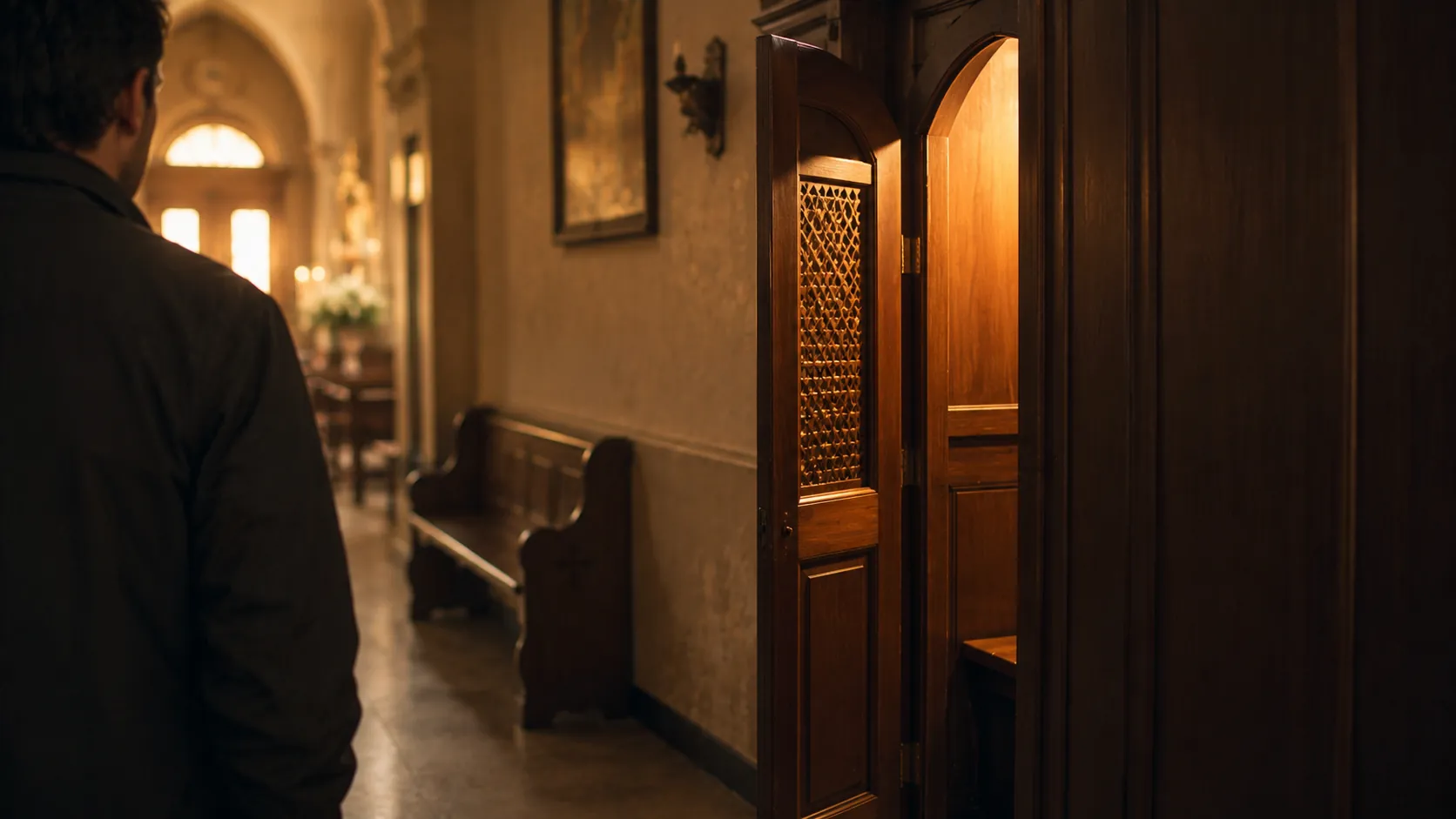
Maybe it has been five years. Maybe ten. Maybe longer. You know you should go to Confession, but the thought of it makes your stomach tighten. You are not sure what to say. You worry the priest will judge you. You are afraid you will forget something or do it wrong. If that is where you are today, stay here for one minute.
Going to Confession after years away can feel intimidating. The longer you have been away, the heavier the first step can seem. But the Sacrament of Reconciliation is not designed to humiliate you. It is where Christ meets the truth of your life with mercy.
The most important thing to know is simple: you can come back. You do not need perfect words. You do not need to remember every detail instantly. You do not need to solve your whole spiritual life before entering the confessional. You need honesty, sorrow for sin, and a willingness to receive grace.
Why Confession Feels So Scary After a Long Time
Fear grows in silence. When you have avoided Confession for years, the Sacrament can become larger and darker in your imagination than it really is. You may imagine the priest reacting with shock, disappointment, or anger. You may imagine yourself freezing and forgetting what to say.
But priests hear Confessions constantly. They hear people return after long absences. They hear ordinary sins, serious sins, confused stories, nervous beginnings, tears, silence, and awkward words. You will not be the first person to say, “Father, it has been a long time.”
The shame that keeps you away is not from God. God’s mercy calls you into the light. Shame says, “Hide until you are better.” Grace says, “Come to Me and let Me heal what is real.”
Do Priests Judge You in Confession?
A good priest is not there to judge your worth. He is there as a minister of Christ’s mercy. He may guide you, ask clarifying questions if needed, or help you make a good Confession, but the purpose is reconciliation, not humiliation.
If you are afraid of being judged, say that at the beginning. You can simply say, “Father, I am nervous. I have not been to Confession in years, and I may need help.” That is not a bad start. It is an honest one.
What to Say in Confession After Years Away
You can begin very simply. When you enter, make the Sign of the Cross and say how long it has been since your last Confession. If you do not remember exactly, say approximately.
For example: “Bless me, Father, for I have sinned. It has been about ten years since my last Confession.” Or: “Father, I do not remember my last Confession. It has been many years, and I need help.”
Then confess your sins honestly. You do not need to tell long stories or defend yourself. Name the sins clearly. If there are serious sins, confess them as directly as you can, including kind and number as far as you reasonably remember. If you do not remember exact numbers after many years, give your best honest estimate.
A Simple Opening You Can Use
Bless me, Father, for I have sinned.
It has been many years since my last Confession.
I am nervous and I may need help.
I want to return to God honestly.
These are my sins...
That is enough to begin. The priest can guide you from there. You do not need to carry the entire structure alone.
How to Prepare for Confession After Years
Preparation helps, especially if it has been a long time. But preparation should not become an excuse to delay forever. The goal is not to create a perfect autobiography of every failure. The goal is to make a sincere examination of conscience and bring your sins into God’s mercy.
Find a quiet place. Ask the Holy Spirit to help you see clearly. Look over the Ten Commandments, the Beatitudes, your duties toward God and neighbor, your relationships, your habits, your speech, your use of money, your sexuality, your honesty, your anger, your neglect of prayer, and your failures in charity.
Write notes if it helps. You can bring notes into Confession. Many people do. It is better to use a simple list than to freeze from nerves.
Do Not Turn Preparation Into Perfectionism
Some people delay Confession because they are afraid their examination is not complete enough. Be careful. Preparation is good, but perfectionism can become another way to hide.
If you sincerely examine your conscience and confess what you remember, you can trust God’s mercy. If you honestly forget something, bring it next time if it comes to mind. Do not let fear of imperfection keep you from the Sacrament.
How to Go to Confession Step by Step
- Before going, pray for the grace to be honest.
- Make a simple examination of conscience.
- Write down what you need to confess if that helps.
- Enter the confessional or reconciliation room.
- Begin with the Sign of the Cross.
- Tell the priest how long it has been.
- Confess your sins clearly and honestly.
- Listen to the priest’s guidance.
- Pray the Act of Contrition.
- Receive absolution.
- Complete your penance afterward.
This may look like many steps, but the priest will help you. If you forget the Act of Contrition, say so. If you do not know what to do next, ask. Confession is not a test of memory.
What If You Are Afraid to Say Certain Sins?
This is often the hardest part. Some sins carry deep shame. You may want to avoid them, soften them, or speak vaguely. But healing begins where truth enters mercy.
Say the sin simply. Do not dramatize it. Do not excuse it. Do not turn it into a long explanation. Name it and let it come into the light.
The moment before saying a difficult sin may feel heavy. The moment after can feel like a door opening. Not always emotionally, but spiritually. Hidden sin isolates. Confessed sin is brought to Christ.
You Will Not Shock God
Nothing you confess will surprise God. He already knows. Confession is not where God discovers your sins. It is where you stop hiding and allow His mercy to reach them.
The priest has likely heard the same kind of sin before. Your fear tells you that you are uniquely terrible. Mercy tells the truth: you are a sinner loved by God and invited home.
Do You Need to Confess Every Sin From Every Year?
You should confess all mortal sins you are aware of after a sincere examination of conscience. For serious sins, confess kind and number as best as you can. If many years have passed and you cannot remember exact details, give an honest estimate.
You do not need to recount every venial sin from many years in exhaustive detail. Bring what you remember honestly, especially patterns and serious matters. The priest can help if you are unsure.
If you genuinely forget a sin, do not panic. Bring it to your next Confession if it later comes to mind. God is not trying to trap you on a technicality. He wants your sincere return.
How to Pray the Act of Contrition
Near the end, the priest will ask you to pray an Act of Contrition. If you do not remember one, you can read it from your phone or a card, or ask the priest to help you.
The Act of Contrition expresses sorrow for sin and the intention, with God’s help, to avoid sin and the near occasions of sin. Do not worry if your emotions are not dramatic. Contrition is not measured only by tears. It is a real turning of the will back toward God.
What Absolution Means
The most beautiful moment is absolution. Through the ministry of the priest, Christ forgives your sins. This is not vague encouragement. It is sacramental grace.
Listen carefully when the priest speaks the words of absolution. Let them land. You may feel relief. You may feel quiet. You may feel nothing dramatic. The grace is still real.
After years away, this moment can be a true beginning again. Not because you are now perfect, but because mercy has touched the truth.
What to Do After Confession
After you leave, complete your penance as soon as reasonably possible. Then give thanks. Do not rush immediately into noise if you can avoid it. Take one quiet minute.
- Thank God for His mercy.
- Complete your penance.
- Do not keep replaying confessed sins.
- Plan your next Confession before years pass again.
- Return to Mass with a renewed heart.
One temptation after Confession is to keep digging up what God has forgiven. Resist that. If you made a sincere Confession, trust the Sacrament. Mercy is not a feeling you have to maintain. It is a gift you have received.
A Prayer Before Confession
Pray this before you go, especially if you feel afraid.
Lord Jesus,
I am afraid to come into the light.
I have hidden for too long.
Give me courage to tell the truth.
Help me confess without excuses.
Help me trust Your mercy more than my shame.
Guide the priest who hears me.
Let this Confession become a true beginning again.
Amen.
One Small Action You Can Take Today
- Search your parish Confession times.
- Choose one realistic time this week.
- Write the date down.
- Pray: Jesus, help me return to mercy.
- Do not wait until you feel fearless.
Mercy Is Stronger Than the Years Away
If you have not been to Confession in years, the years matter, but they are not stronger than God’s mercy. The distance may feel large to you. It is not too large for Christ.
Go nervously if you must. Go awkwardly. Go with notes. Go and say, “Father, I need help.” That sentence alone can open the door.
The Sacrament is not about proving that you are worthy to return. It is about receiving the mercy that makes return possible.
Before you go… Take one quiet minute. Speak honestly to God. One sentence is enough. He is already listening.
Begin every morning with one quiet minute. Receive a short daily prayer, a reflection, a Saint, and one simple action—delivered to your inbox each morning. Join the One Minute Catholic community today.
Questions
How do I go to Confession after years away?
Begin by telling the priest it has been many years and that you may need help. Then confess your sins honestly. The priest can guide you through the rest.
What should I say in Confession after a long time?
Say, “Bless me, Father, for I have sinned. It has been many years since my last Confession.” Then name your sins clearly and honestly.
Will the priest judge me in Confession?
A priest is there to minister Christ’s mercy, not humiliate you. Priests regularly hear from people returning after long absences.
What if I forgot how to confess?
Tell the priest. You can say, “Father, I forgot how to do this. Can you help me?” He can guide you step by step.
What if I forget a sin in Confession?
If you honestly forget a sin after a sincere examination, do not panic. Bring it to your next Confession if it later comes to mind.