Catholic Teaching · 8 min read · Published
What Does the Communion of Saints Mean?
The communion of saints is not a distant list of exceptional Catholics. It is the living union Christ creates among his people on earth and in heaven.
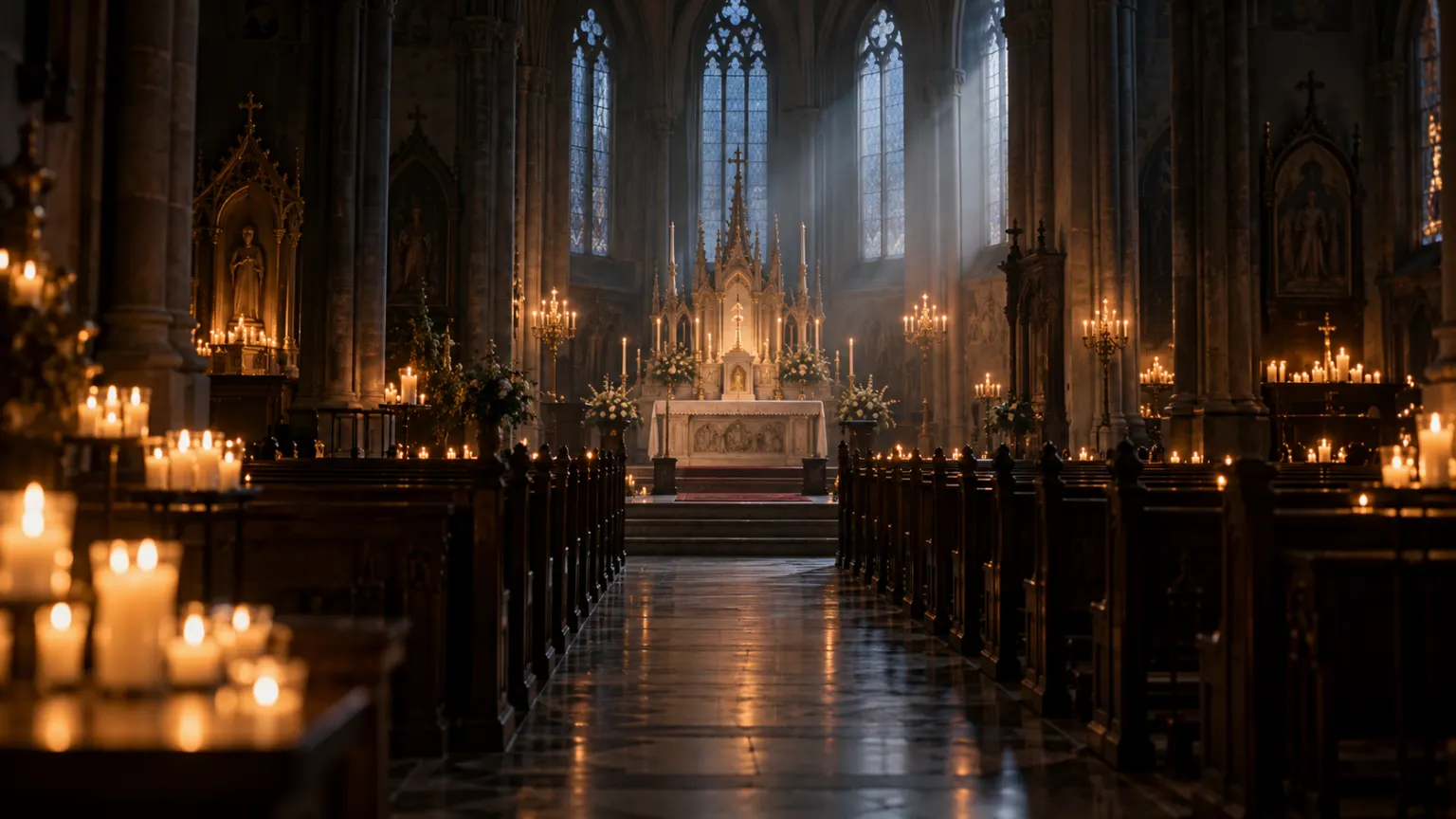
On November 1, the Church celebrates the Solemnity of All Saints. The 2026 USCCB calendar places the solemnity on Sunday, November 1, with the great multitude in Revelation, the promise that we are God’s children in the First Letter of John, and the Beatitudes in Matthew. The liturgy does more than remember famous holy people. It turns our attention toward the full company of those who belong to Christ and now share his life in glory.
That celebration can also clarify a phrase Catholics say often without stopping to examine it. In the Apostles’ Creed, we profess belief in “the communion of saints.” What exactly are we affirming? The answer is more personal and more practical than a catalogue of names. The communion of saints means that life in Christ joins his people in a real exchange of faith, prayer, grace, and love—across parishes, cultures, generations, and even death.
All Saints Day Reveals a Family Larger Than Memory
Vatican News traces the public celebration of all the saints to the early centuries of Christianity and explains how November 1 eventually became the date observed in Rome. The feast gathers into one celebration those known by name and the countless holy people whose stories were never recorded publicly. Canonized saints are reliable witnesses whom the Church proposes for universal veneration, but God’s work is not limited to the names printed on a calendar.
This protects All Saints Day from becoming a religious awards ceremony. Holiness is not a competition for the unusually gifted. The Gospel for the solemnity presents the Beatitudes: poverty of spirit, mercy, purity of heart, hunger for righteousness, peacemaking, and fidelity under pressure. These are forms of life shaped by grace. The saints show many paths, temperaments, vocations, and historical circumstances, but they share one center: Christ.
Two Meanings Inside One Communion
In his 2013 general audience on the communion of saints, Pope Francis recalled the Catechism’s two connected meanings: communion in holy things and communion among holy persons. The first points to gifts that Christians receive and share rather than possess privately. Faith, the sacraments, spiritual gifts, prayer, charity, and the life of grace come from God and are given for the good of the whole body.
The second meaning points to the people united in Christ. This includes the faithful still making their pilgrimage on earth, those who have died and are being purified, and those already enjoying the glory of God. The Church does not imagine three unrelated groups. She confesses one body held together by Christ. The living pray for one another and for the dead; the saints in heaven intercede for the Church; every genuine gift strengthens more than the person who receives it.
- We receive the faith from witnesses rather than inventing it alone.
- We share in the sacraments and prayer of the whole Church.
- We can offer prayer, sacrifice, mercy, and service for another person’s good.
- We remain united in Christ to faithful people who have died.
- We may ask the saints in heaven to pray with and for us.
Why the Saints Do Not Replace Jesus
A common question is whether asking a saint to pray somehow competes with going directly to Jesus. Catholic teaching begins in the opposite place: communion exists only because Christ joins people to himself. A saint has no independent source of grace and does not stand between God and a believer as an obstacle. The saint’s prayer is a fruit of belonging to Christ, just as asking a Christian friend to pray is possible because both people depend on the Lord.
The comparison with a friend is helpful but incomplete. The saints see God face to face and their intercession belongs to the perfected charity of heaven. We do not worship them. We honor what God’s grace has accomplished in them, learn from their example, and ask them to join our prayer. Every faithful devotion should return attention to the Trinity, deepen trust in Christ, and help us live the Gospel more honestly.
The Communion of Saints Is Good News for Ordinary Catholics
Pope Francis described this communion as one of the most consoling truths of the faith because it reminds us that we are not alone. That matters on days when prayer feels weak, when a parish seems imperfect, or when personal holiness looks impossible. Another member of Christ’s body is praying, serving, forgiving, teaching, suffering faithfully, or praising God. Hidden grace in one life can strengthen hope in another.
Communion also gives responsibility. Our choices do not remain sealed inside a private spiritual life. Patience can protect a family. Honest work can serve people we never meet. Confession can interrupt a pattern of harm. A quiet act of mercy can make the Church more credible to someone who has known only indifference. Sin wounds communion; grace repairs and enlarges it. All Saints Day therefore invites admiration, but it also invites participation.
A Simple Way to Celebrate All Saints Day
Begin with the liturgy if you are able. Listen for the breadth of the multitude in Revelation and for the concrete shape of holiness in the Beatitudes. Then choose one saint—not necessarily the most familiar—and read from a trustworthy Catholic source about one virtue, decision, or form of service in that person’s life. Do not try to copy an entire biography. Ask what one faithful response belongs in your circumstances now.
Finally, remember someone who helped hand the faith to you: a relative, priest, religious sister, teacher, friend, or quiet parishioner. Thank God for that person. If the person is living, send a brief word of gratitude. If the person has died, pray for them. The communion of saints becomes easier to understand when we notice that faith has already reached us through other lives.
A Short Prayer for All Saints Day
Lord Jesus, You gather Your people into one body and never ask me to seek holiness alone. Thank You for the saints who show what grace can make possible. Receive the prayers I offer for others, strengthen me through the prayer of Your Church, and free me from treating faith as a private possession. Through the intercession of all the saints, teach me one faithful way to live the Beatitudes today. Amen.
One Concrete Action
Choose one saint before November 1 and identify one specific virtue visible in that saint’s life. Write one sentence that turns the virtue into an action small enough for today—for example: “Because Saint Elizabeth served people who were poor, I will give one useful item in good condition rather than what I want to discard.” Complete the action quietly, then ask that saint to pray that Christ will make the virtue steady in you.
The communion of saints is not an escape from ordinary relationships or responsibilities. It is the deeper truth inside them. Christ’s life is shared, prayer crosses boundaries we cannot cross alone, and holiness in one member becomes encouragement for the whole body. On All Saints Day, the Church looks toward heaven not to become less present on earth, but to remember what grace is preparing and to begin living that communion now.
Official sources
Questions
What does the communion of saints mean in the Apostles’ Creed?
It means both communion in holy things—such as faith, sacraments, spiritual gifts, prayer, and charity—and communion among the people united to Christ on earth, being purified after death, and already in heaven.
Is the communion of saints the same as All Saints Day?
No. The communion of saints is an enduring reality of the Church. All Saints Day is the annual solemnity on November 1 that celebrates all the saints and makes this communion especially visible in the liturgy.
Why do Catholics ask saints to pray for them?
Catholics believe that those who die in Christ remain alive in him and united to his body. Asking a saint to intercede is asking another member of Christ’s body to pray; the grace and answer still come from God.
Do Catholics worship saints?
No. Worship belongs to God alone. Catholics honor the saints as works of God’s grace, learn from their witness, and ask for their intercession.
Are only canonized people part of the communion of saints?
No. Canonization identifies particular saints for public veneration throughout the Church. The communion of saints includes the whole Church united in Christ, including countless holy people known fully only to God.
How can I celebrate All Saints Day at home?
Participate in Mass if possible, read the Beatitudes, learn about one saint from a trustworthy source, thank God for someone who handed on the faith, and practice one concrete virtue inspired by that witness.